Shock Loss After a Hair Transplant: Why It Happens and Whether It's Permanent
- Manoj Kumar
- Apr 15
- 4 min read

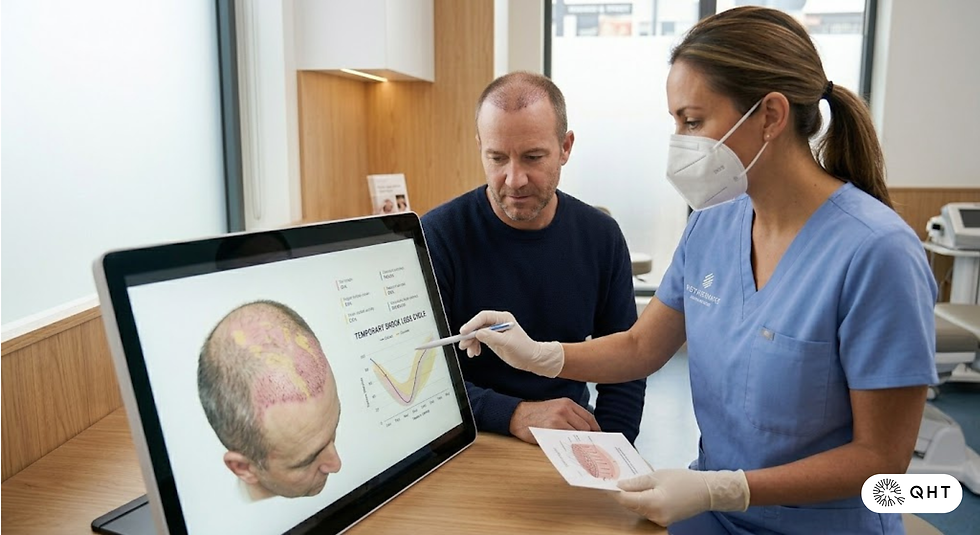
You finally go through a hair transplant.
Everything looks promising for the first couple of weeks… and then suddenly, hair starts falling out again.
That moment can be stressful.
Many patients assume something has gone wrong. Some even believe the transplant has failed.
But here’s the truth.
Shock loss is one of the most misunderstood parts of the hair restoration journey.
If you're planning a Hair Transplant in Hyderabad or have recently undergone the procedure, understanding shock loss is essential. While the Hair transplant cost in Hyderabad may influence your decision, knowing what happens after surgery is what actually determines your satisfaction.
Let’s break it down clearly.
What Is Shock Loss After a Hair Transplant?
Shock loss is a temporary shedding of transplanted or existing hair that occurs a few weeks after a hair transplant due to surgical stress. In most cases, the hair regrows within a few months.
What Exactly Is Shock Loss?
Shock loss refers to temporary hair shedding triggered by the trauma of surgery.
It can affect:
• Transplanted hair• Existing hair around the treated area
Why It Feels Confusing
• You just added hair… and now it’s falling• It happens suddenly• It looks worse before it gets better
Insight
Shock loss is not failure. It’s part of the growth cycle resetting.
At QHT Hyderabad Clinic, patients are informed about this phase in advance so they don’t panic when it happens.
Why Does Shock Loss Happen?
1. Surgical Trauma
During a transplant, tiny incisions are made in the scalp.
This temporarily disrupts:
• Blood supply
• Hair follicle stability
2. Stress Response of Hair Follicles
Hair follicles enter a resting phase (telogen).
3. Temporary Weakening of Existing Hair
Nearby native hair can also shed due to stress.
4. Inflammation
Mild inflammation affects follicle activity.
Insight
Your scalp is adjusting to change. Shedding is part of that adjustment.
When Does Shock Loss Occur?
Typical Timeline
• Starts: 2–4 weeks after surgery
• Peaks: 4–8 weeks
• Recovery: 3–6 months
What You’ll Notice
• Sudden thinning
• Uneven appearance
• Loss of newly transplanted hair
Insight
Timing is predictable, even if it feels sudden.
Patients choosing a hair transplant service in Hyderabad are often given clear timelines to manage expectations.
Is Shock Loss Permanent?
Short Answer
No, in most cases, it’s temporary.
Detailed Explanation
• Transplanted follicles remain intact
• Only the hair shaft sheds
• New growth begins after resting phase
Rare Cases
Shock loss can be permanent if:
• Pre-existing hair was already weak
• Advanced hair loss condition exists
Insight
The follicle survives even when the hair falls.
Types of Shock Loss
1. Transplanted Hair Shock Loss
• Completely normal
• Expected in almost all cases
2. Native Hair Shock Loss
• Occurs in surrounding areas
• More common in thinning hair
3. Donor Area Shock Loss
• Less common
• Usually temporary
Insight
Understanding the type helps reduce unnecessary worry.
Visual Recovery Timeline
Weeks 1–2
• Hair looks intact
Weeks 3–6
• Shedding begins
Months 2–3
• Minimal visible growth
Months 3–6
• New hair starts appearing
Months 6–12
• Full growth phase
Insight
The “ugly phase” is temporary but essential.
Clinics known as the best clinic for hair transplant in Hyderabad guide patients through this timeline with regular follow-ups.
How to Minimize Shock Loss
1. Choose an Experienced Surgeon
Technique matters.
2. Follow Aftercare Strictly
• Gentle washing• No scratching
3. Use Prescribed Medications
• Minoxidil• Finasteride (if advised)
4. Avoid Stress and Smoking
Improves blood circulation.
5. Maintain Nutrition
• Protein-rich diet• Vitamins
You can learn more about proper aftercare protocols.
Common Myths About Shock Loss
Myth 1: The Transplant Failed
Reality: It’s part of the process.
Myth 2: Hair Will Not Grow Back
Reality: It usually regrows.
Myth 3: Only Transplanted Hair Falls
Reality: Native hair can shed too.
Myth 4: It Means Poor Surgery
Reality: Happens even in perfect procedures.
Insight
Most panic comes from misinformation.
Real Patient Scenario
Patient A
• Experiences shock loss• Panics
Result
• Unnecessary stress
Patient B
• Understands process• Waits patiently
Result
• Healthy regrowth
Lesson
Awareness changes experience.
When Should You Worry?
Warning Signs
• No regrowth after 6 months
• Severe patchiness• Scalp infection
• Persistent redness or pain
Action
Consult your doctor immediately.
You can also visit our clinic for expert evaluation if you notice unusual symptoms.
Common Mistakes Patients Make
1. Judging Results Too Early
Hair growth takes time.
2. Comparing with Others
Recovery varies.
3. Ignoring Aftercare
Affects outcomes.
4. Stressing Excessively
Impacts healing.
5. Using Unverified Products
Can damage follicles.
Actionable Checklist
Before Surgery
• Understand shock loss
After Surgery
• Follow instructions
During Shedding Phase
• Stay calm
• Avoid panic
During Growth Phase
• Monitor progress
Insight
Patience is part of treatment.
People Also Ask (PAA)
How long does shock loss last?
Usually 3–6 months.
Does everyone experience shock loss?
Most patients do.
Can shock loss be prevented?
Not completely, but minimized.
Is shock loss painful?
No, just visible.
When will hair grow back?
Around 3–4 months.
Can stress worsen shock loss?
Yes, indirectly.
Should I use minoxidil after transplant?
Only if prescribed.
Conclusion
Shock loss is one of the most misunderstood yet completely normal phases of a hair transplant journey. While it can feel alarming, it’s actually a sign that your hair follicles are transitioning into a new growth cycle.
If you're considering a Hair Transplant in Hyderabad, understanding this phase can help you stay calm and confident during recovery. And while the Hair transplant cost in Hyderabad may influence your decision, it’s the post-procedure awareness and care that truly define your results.
Because real success in hair restoration isn’t instant.
It’s gradual, predictable, and worth the wait.
If you want expert guidance through every stage of your journey, you can explore our Hyderabad center and take the next step with clarity.
Stay patient.
Trust the process.
Your results are coming.


Comments