Is Balding 100% Genetic? How to Understand the Real Causes of Hair Loss
- Manoj Kumar
- Feb 19
- 4 min read

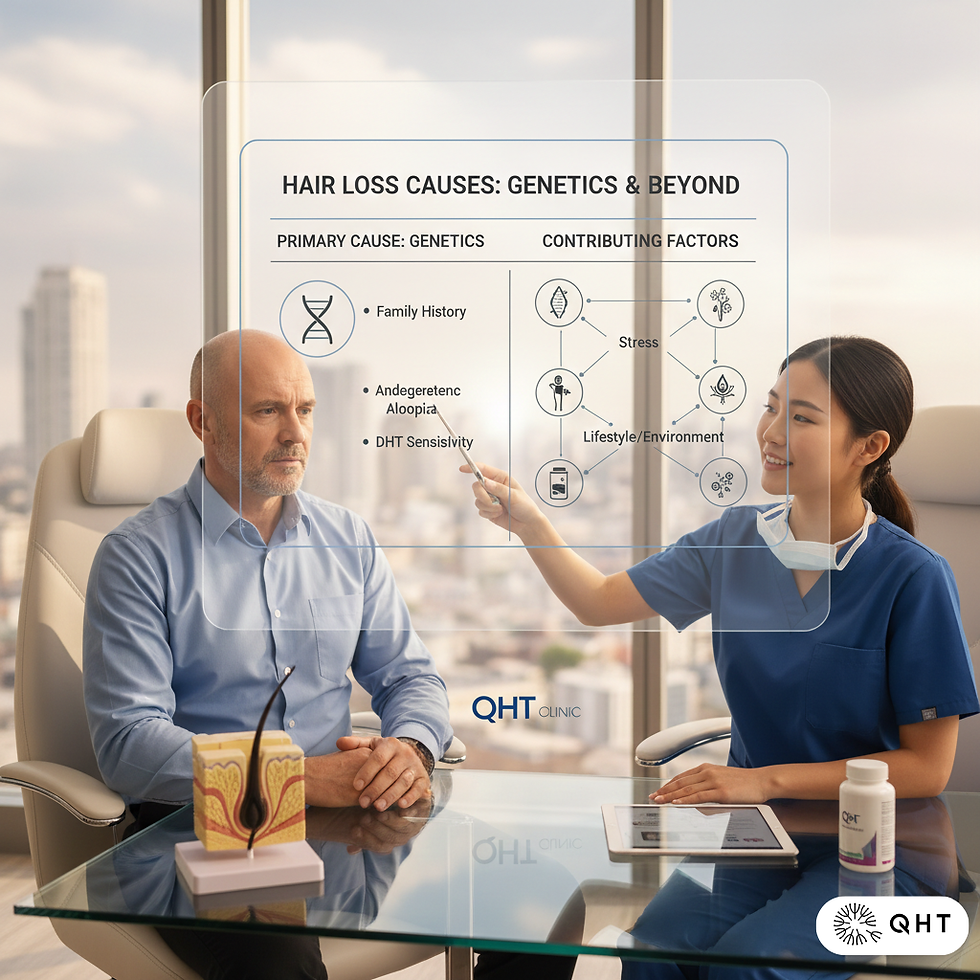
Hair loss has a way of feeling personal. You notice extra strands on your pillow, your hairline shifts slightly, and suddenly you’re wondering if your fate was sealed by DNA. This question comes up constantly in clinics offering a Hair Transplant in Hyderabad, especially when patients are comparing treatment paths and thinking about the long-term value behind the Hair transplant cost in Hyderabad.
So let’s answer this properly.
No, balding is not 100% genetic. Genetics play a major role, particularly in pattern hair loss, but they’re only part of a much bigger picture. Hormones, lifestyle, health conditions, stress, nutrition, and even medications can influence how, when, and why hair thinning occurs.
Understanding the difference can change everything about how you approach treatment.
Is balding entirely genetic?
No. While genetic predisposition drives conditions like androgenetic alopecia, many other factors contribute to hair loss, including hormonal changes, stress, nutritional deficiencies, illness, medications, and scalp disorders.
Why People Believe Hair Loss Is “All Genetic”
It’s easy to see why this myth persists:
“My father is bald, so I will be too”
“It runs in my family”
“Nothing can stop it”
Genetics absolutely influence susceptibility, but expression varies widely. Two siblings with the same parents can experience dramatically different hair patterns.
Genes load the gun. Environment pulls the trigger.
The Genetics of Hair Loss Explained
Androgenetic Alopecia (Pattern Baldness)
This is the most common cause.
Key features:
Linked to genetic sensitivity
Influenced by DHT (dihydrotestosterone)
Progressive miniaturization of follicles
Predictable patterns (Norwood/Ludwig scales)
Importantly:
👉 It’s not just “baldness gene from mother’s side”👉 Multiple genes are involved👉 Hormones determine activation
But Genetics Alone Don’t Dictate Outcomes
Even with strong family history:
✔ Onset age differs✔ Severity varies✔ Rate of progression changes✔ Response to treatment differs
Which tells us something crucial: other factors modify the process.
The Non-Genetic Causes of Hair Loss
Here’s where many people are surprised.
1️⃣ Hormonal Imbalances
Hormones regulate follicle cycling.
Common culprits:
Thyroid disorders
PCOS
Postpartum shifts
Testosterone fluctuations
Symptoms may include:
❗ Diffuse thinning❗ Sudden shedding❗ Texture changes
2️⃣ Stress & Telogen Effluvium
One of the most underestimated triggers.
Causes:
Emotional trauma
Surgery
Illness
Crash dieting
Effect:
👉 Hair prematurely enters shedding phase
Good news:
✔ Usually reversible
3️⃣ Nutritional Deficiencies
Hair is metabolically active tissue.
Deficiencies linked to hair loss:
Iron
Vitamin D
Vitamin B12
Zinc
Protein
This is extremely common in India.
4️⃣ Medical Conditions
Hair loss can be secondary to:
Autoimmune disorders (alopecia areata)
Chronic infections
Severe fever
Anemia
5️⃣ Medications
Certain drugs may trigger shedding:
Antidepressants
Blood pressure medicines
Chemotherapy
Acne treatments
6️⃣ Scalp Disorders
Healthy follicles need healthy skin.
Conditions include:
Seborrheic dermatitis
Psoriasis
Fungal infections
Scarring alopecia
7️⃣ Lifestyle Factors
❗ Smoking❗ Poor sleep❗ Chronic inflammation❗ Extreme dieting
These don’t cause genetic baldness, but can accelerate visible thinning.
Unique Insight Most Blogs Miss
Many patients diagnosed with “genetic hair loss” actually have multiple overlapping triggers.
Example:
👉 Genetic predisposition
Iron deficiency
Stress-induced shedding
Result:
Rapid, alarming hair fall.
Treatment must address all contributors, not just genetics.
How Doctors Differentiate Hair Loss Types
Clinical Evaluation Includes:
✔ Pattern analysis✔ Donor area assessment✔ Scalp examination✔ Medical history✔ Blood tests
Guessing based on family history alone is risky.
Can Non-Genetic Hair Loss Be Reversed?
Often, yes.
Cause | Reversibility |
Telogen Effluvium | Usually reversible |
Nutritional Deficiency | Reversible with correction |
Thyroid-related | Improves with treatment |
Medication-induced | Often reversible |
Androgenetic Alopecia | Manageable, not fully reversible |
Why Early Diagnosis Matters
Delaying evaluation can lead to:
❗ Permanent miniaturization❗ Reduced donor density❗ More aggressive thinning❗ Limited treatment options
Early intervention preserves choices.
Practical Example from Clinical Practice
Patient belief:
"It’s genetic. Nothing to do."
Findings:
👉 Severe Vitamin D deficiency👉 Stress-related shedding
After correction:
✔ Shedding reduced✔ Density improved
Not everything is destiny.
Treatment Options Based on Cause
For Genetic Hair Loss
Finasteride
Minoxidil
PRP therapy
Hair transplant
For Deficiency-Related Loss
Nutritional correction
Diet optimization
Medical supplementation
For Stress-Induced Loss
Stress management
Sleep improvement
Patience (hair cycles normalize)
For Hormonal Causes
Treat underlying imbalance
Endocrine evaluation
Where Hair Transplant Fits In
Hair transplantation does not cure genetics, but it:
✔ Redistributes permanent follicles✔ Restores lost density✔ Rebuilds hairline✔ Improves appearance
Patients exploring a Hair Transplant in Hyderabad often combine surgery with medical stabilization for best long-term outcomes.
For procedural understanding and candidacy details:https://qhtclinic.com/city-services/hair-transplant-in-hyderabad/
People Also Ask (PAA)
Can you go bald without family history?
Yes. Hair loss can occur due to hormones, illness, stress, or deficiencies.
Is hair loss from stress permanent?
Usually not. Telogen effluvium is often reversible.
Can vitamins stop genetic balding?
They help deficiencies, not genetic follicle sensitivity.
Why did my hair suddenly start falling?
Possible triggers include stress, illness, hormonal shifts, or nutritional issues.
Is male pattern baldness preventable?
It can often be slowed with early treatment.
Do women experience genetic hair loss?
Yes, commonly as female pattern hair loss.
Common Mistakes People Make
❌ Self-Diagnosing
Assuming genetics without evaluation.
❌ Blind Supplement Use
Taking vitamins without testing.
❌ Delaying Treatment
Waiting until loss becomes extensive.
❌ Expecting Oils to Reverse Genetics
Cosmetic care ≠ medical solution.
Actionable Tips to Protect Your Hair
✔ Get blood tests if shedding increases✔ Maintain adequate protein intake✔ Address chronic stress✔ Treat scalp conditions early✔ Seek professional diagnosis
Local Relevance: Hair Loss Patterns in India
Clinicians frequently observe:
Early onset androgenetic alopecia
Widespread Vitamin D deficiency
Iron deficiency, especially in women
Stress-related shedding
Which reinforces a key point:
👉 Hair loss is often multifactorial
Final Thoughts: Is Balding 100% Genetic?
No. Genetics are powerful, but they’re not the whole story.
Hair loss can stem from hormones, stress, nutritional gaps, illness, medications, scalp conditions, and lifestyle factors. Even when genetics are involved, progression and severity can often be influenced with timely intervention.
If you’re considering solutions ranging from medical therapy to a Hair Transplant in Hyderabad, it’s wise to evaluate underlying causes rather than focusing only on the Hair transplant cost in Hyderabad. The best outcomes come from treating the right problem with the right strategy.
Because not all hair loss is inevitable, and not all thinning follows the same rules.
Key Takeaway
Hair loss is rarely caused by genetics alone. Proper diagnosis is the foundation of effective treatment.
A Thoughtful Next Step
If you’re unsure what’s driving your hair loss, a professional consultation that includes scalp assessment and basic investigations can provide clarity, prevent unnecessary treatments, and help you choose the most appropriate path forward.



Comments