How to Reduce Swelling and Bruising After a Hair Transplant - Immediate Care
- Manoj Kumar
- Mar 2
- 4 min read


If you’ve recently undergone a Hair Transplant in Hyderabad, chances are you’re excited about the results but slightly concerned about post-procedure swelling or bruising. That’s completely normal.
Swelling around the forehead or eyes and mild bruising near the donor area are common after a procedure. The good news? With the right immediate care, you can significantly reduce discomfort, speed up recovery, and protect your grafts. Understanding how to manage this early phase also helps you get the best possible outcome, regardless of your overall Hair transplant cost in Hyderabad.
This guide walks you through exactly what to do, what to avoid, and when to seek help.
Why Swelling and Bruising Happen After a Hair Transplant
Before we talk solutions, let’s quickly understand the cause.
During an FUE or FUT hair transplant:
Local anesthesia is injected into the scalp.
Tiny incisions are made to implant grafts.
Fluid is used to maintain tissue hydration.
Your body reacts to this minor surgical trauma by sending inflammatory cells to the area. That leads to:
Forehead swelling (typically days 2 to 4)
Mild bruising around eyes or temples
Tightness or puffiness
It’s a temporary healing response, not a complication in most cases.
How Long Does Swelling Last?
Most patients experience:
Symptom | Timeline |
Mild swelling | Day 2 to Day 4 |
Peak swelling | Day 3 |
Gradual reduction | Day 4 to Day 6 |
Bruising fade | Within 7–10 days |
If swelling persists beyond a week or worsens, it needs evaluation.
Immediate Care: Step-by-Step Guide to Reduce Swelling and Bruising
Let’s get practical.
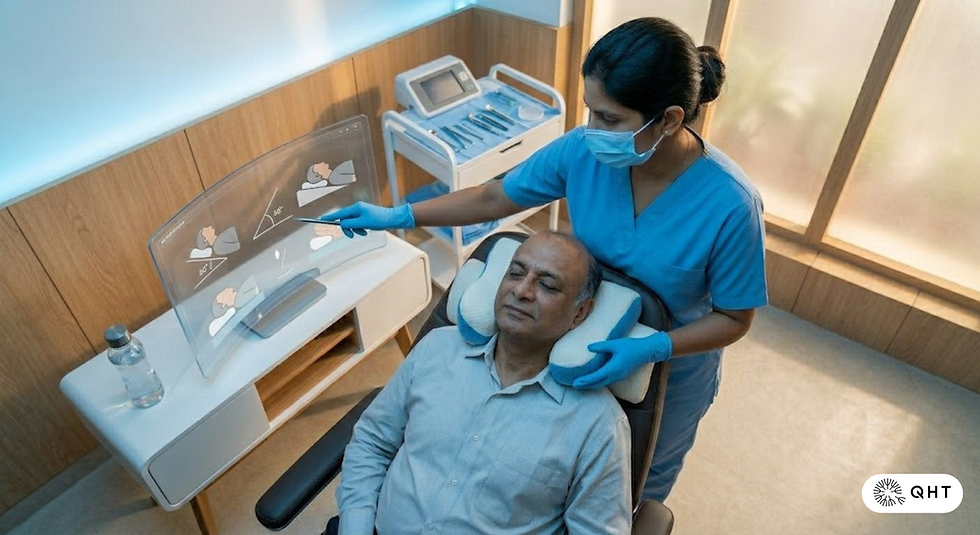
1. Keep Your Head Elevated (Even While Sleeping)
This is the single most important step.
Gravity helps prevent fluid from accumulating in your forehead.
What to do:
Sleep at a 45-degree angle for 3 to 5 nights
Use 2–3 pillows or a travel neck pillow
Avoid lying flat
Patients who ignore this almost always report more swelling.
2. Use a Cold Compress (Correct Way Only)
Cold therapy constricts blood vessels and reduces inflammation.
But here’s the catch:
Never apply ice directly on transplanted grafts.
Instead:
Apply cold compress on the forehead (above eyebrows)
Do 10–15 minutes every hour on Day 1 and 2
Wrap ice in cloth
This reduces fluid migration toward the eyes.
3. Take Prescribed Anti-Inflammatory Medication
Your surgeon may prescribe:
Oral steroids
NSAIDs (if suitable)
Antibiotics
Do not skip medication.And don’t self-medicate with random painkillers.
Follow the dosage strictly.
4. Avoid Strenuous Activity
Gym. Running. Bending. Heavy lifting.
All of this increases blood flow to the scalp and worsens swelling.
For at least 7 days:
No workouts
No yoga inversions
No sudden head movements
Light walking is fine.
5. Stay Hydrated, But Avoid Alcohol
Water supports healing.
Alcohol increases:
Blood vessel dilation
Bruising
Fluid retention
Avoid alcohol for 5 to 7 days post-procedure.
6. Avoid Direct Sun Exposure
Heat increases inflammation.
If you must step out:
Wear a loose, surgeon-approved cap
Avoid sweating
In cities like Hyderabad, heat exposure can worsen swelling significantly.
7. Follow Proper Washing Instructions
Usually, the first wash is guided by the clinic.
General principles:
Use gentle dabbing motion
Avoid high-pressure water
No aggressive rubbing
Improper washing can dislodge grafts and trigger inflammation.
What Most Patients Do Wrong (Common Mistakes)
Here’s what I’ve seen repeatedly:
Sleeping flat on the first night
Applying ice directly to graft area
Resuming gym within 3 days
Ignoring prescribed steroids
Consuming alcohol at social events
These small mistakes delay healing and increase bruising.
To reduce swelling and bruising after a hair transplant:
Sleep with head elevated at 45 degrees
Apply cold compress on forehead, not grafts
Take prescribed anti-inflammatory medicines
Avoid exercise for 7 days
Stay hydrated and avoid alcohol
Protect scalp from heat
Does Technique Affect Swelling?
Yes, to some extent.
Modern FUE techniques with:
Minimal incision depth
Controlled anesthesia usage
Proper tumescence management
tend to produce less swelling.
Clinics that follow structured post-op protocols, like those outlined on the official service page for Hair Transplant in Hyderabad, usually emphasize patient education to minimize recovery issues.
Technique matters. But aftercare matters more.
When Is Swelling Not Normal?
Contact your surgeon if you notice:
Severe pain
Fever
Redness spreading rapidly
Persistent swelling beyond 7 days
Pus discharge
These may indicate infection.
The Indian Association of Dermatologists and global surgical bodies emphasize early reporting of unusual symptoms to avoid complications.
Bruising: Why It Happens and How to Minimize It
Bruising happens when tiny blood vessels break under the skin.
It’s more common if:
You’re prone to easy bruising
You take blood thinners
You didn’t stop certain supplements (like Vitamin E or fish oil)
To reduce bruising:
Avoid aspirin unless prescribed
Avoid herbal supplements pre-surgery
Use cold compress early
Keep head elevated
Bruising usually fades naturally.
Nutrition That Helps Recovery
Healing isn’t just external.
Focus on:
Protein (eggs, paneer, lentils)
Vitamin C (amla, citrus fruits)
Zinc (nuts, seeds)
Iron-rich foods
Avoid crash dieting post-surgery.
Emotional Side of Recovery
Many patients panic when swelling reaches the eyes.
It looks dramatic but it’s temporary.
By Day 5, most swelling resolves.
Trust the process.
People Also Ask
1. Is swelling after hair transplant dangerous?
No, mild swelling is a normal inflammatory response. Severe or prolonged swelling needs medical review.
2. How many days does forehead swelling last?
Usually 3 to 5 days, peaking around Day 3.
3. Can I use ice on my scalp after transplant?
No. Apply cold compress only on the forehead area, never directly on grafts.
4. Does drinking water reduce swelling?
Hydration supports healing, but elevation and medication are more important.
5. Can I go to work with swelling?
Yes, if your job is not physically demanding. Many patients resume desk work in 3 to 4 days.
6. Does FUE cause less swelling than FUT?
Generally yes, but technique and aftercare play bigger roles.
7. Will swelling affect my final results?
No, temporary swelling does not impact graft survival if managed properly.
Final Thoughts
Swelling and bruising after a hair transplant aren’t complications. They’re part of healing.
The difference between a smooth recovery and an uncomfortable one often comes down to immediate care.
If you’ve invested in a Hair Transplant in Hyderabad, protecting your grafts and following structured post-operative guidance ensures you get full value from your Hair transplant cost in Hyderabad.
Take the first 7 days seriously.
Follow elevation. Use cold compress properly. Avoid shortcuts.
And if anything feels unusual, speak to your surgeon early. A qualified clinic will always prioritize patient safety and long-term outcomes over shortcuts.
Healing well today sets the stage for confident results tomorrow.


Comments