Hair Transplants With Diabetes or Hypertension: Medical Factors That Complicate Candidacy
- Manoj Kumar
- May 5
- 5 min read

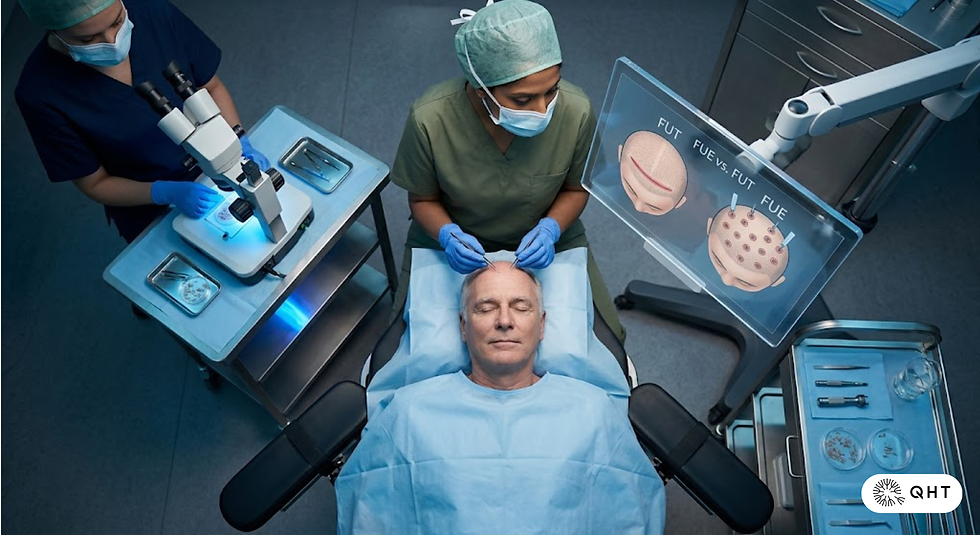
Hair loss does not discriminate, and neither does the desire to restore it. Millions of people managing chronic conditions like diabetes and hypertension also experience hair thinning and naturally wonder whether they can safely access a Hair Transplant in Hyderabad.
The honest answer is that both conditions complicate candidacy in meaningful ways, but they rarely represent absolute disqualifiers when properly controlled. What they do demand is a higher standard of pre-surgical medical evaluation, a stricter set of control targets, and a surgical team experienced in managing medically complex patients.
Understanding how these conditions interact with surgical biology helps patients and physicians make safer, more informed decisions. The hair transplant cost in Hyderabad for medically complex patients may include additional pre-operative evaluations that are well worth the investment.
How Diabetes Affects Hair Transplant Outcomes
Diabetes impairs the surgical process through two primary mechanisms: microvascular damage and impaired wound healing. Chronically elevated blood glucose damages the small blood vessels (capillaries) that supply the scalp tissue and transplanted grafts. This microangiopathy reduces the speed and efficiency of neovascularisation, the capillary in-growth that establishes the transplanted graft's permanent blood supply within the first two weeks after surgery.
The practical consequence is lower graft survival rates. Studies comparing hair transplant outcomes in controlled versus poorly controlled diabetic patients consistently show reduced graft take rates in the poorly controlled group. Patients with HbA1c above 7.5 percent at the time of surgery face measurably worse outcomes than those with HbA1c below 7 percent.
Diabetes also increases infection risk.
Any surgical wound in a diabetic patient carries a higher probability of secondary bacterial infection, which can destroy transplanted grafts, extend the healing period, and produce scarring that permanently compromises the transplanted zone.
Diabetes Control Targets Before Hair Transplant Surgery
Diabetic patients should meet the following targets before a hair transplant is scheduled:
• HbA1c below 7.0 percent, or below 7.5 percent for long-standing diabetics where tighter control carries hypoglycaemic risk.
• Fasting blood glucose consistently below 130 mg/dL.
• No active diabetic foot ulcers or other active infection sites.
• Medical clearance from the treating endocrinologist or diabetologist confirming stable glycaemic control for at least three months.
Patients who meet these targets and have no significant microvascular complications such as proliferative retinopathy or advanced nephropathy can be considered appropriate candidates for hair transplant surgery with appropriate monitoring.
How Hypertension Affects Hair Transplant Candidacy
Hypertension affects hair transplant surgery primarily through its impact on intraoperative bleeding and post-operative healing. Elevated blood pressure increases bleeding during recipient site creation and graft implantation. Excessive intraoperative bleeding obscures the surgical field, reduces the precision of graft placement, and increases the risk of graft dislodgement in the immediate post-operative period.
The epinephrine added to local anaesthetic during hair transplant surgery causes vasoconstriction that partially mitigates bleeding risk. However, in hypertensive patients, the interaction between epinephrine and elevated blood pressure requires careful dose management. Most experienced hair transplant surgeons have protocols for managing this interaction, but it requires active monitoring and dose adjustment.
Post-operatively, elevated blood pressure increases the risk of graft displacement from the recipient sites in the first 72 hours, during which grafts are not yet secured by neovascularisation and are susceptible to physical disruption including increased blood pressure-driven scalp tension.
Hypertension Control Targets for Hair Transplant Surgery
Patients with hypertension should achieve the following before surgery is scheduled:
• Blood pressure consistently below 140/90 mmHg on stable medication, ideally below 130/85 mmHg.
• No recent changes to antihypertensive medication in the preceding four weeks.
• Medical clearance from the treating cardiologist or physician confirming stable cardiovascular status.
• Disclosure of all antihypertensive medications to the surgeon, including beta-blockers, ACE inhibitors, and calcium channel blockers, as these interact differently with surgical anaesthesia and epinephrine.
Some antihypertensives, particularly minoxidil-based medications, may independently affect hair growth and loss patterns, a nuance worth discussing with both the prescribing physician and the hair transplant surgeon before finalising any surgical plan.
Surgical Modifications for Medically Complex Patients
Experienced hair transplant surgeons make specific modifications for patients with diabetes or hypertension:
1. Shorter surgical sessions: Instead of a single eight-hour mega-session, medically complex patients may benefit from two shorter four-hour sessions, reducing both physiological stress and the period of glucose or blood pressure instability.
2. Enhanced monitoring: Blood glucose checks every two hours for diabetic patients during surgery and blood pressure monitoring throughout the procedure.
3. Adjusted anaesthetic protocols: Modified epinephrine concentrations and total dosage in hypertensive patients to balance haemostasis with cardiovascular safety.
4. Extended post-operative care window: More frequent post-operative check-ins in the first week to identify and address any healing complications early.
The hair transplant cost in Hyderabad for medically complex patients may be slightly higher due to these additional monitoring and protocol requirements, but these modifications exist to protect the patient and the surgical investment.
Frequently Asked Questions
Q: Can diabetics get a hair transplant in Hyderabad?
A: Yes, with proper medical control. Diabetic patients with HbA1c below 7.0 to 7.5 percent, stable fasting glucose, and clearance from their endocrinologist can be appropriate hair transplant candidates. Poorly controlled diabetes significantly reduces graft survival rates and increases infection risk, making pre-surgical glycaemic optimisation essential.
Q: How does hypertension affect hair transplant surgery?
A: Hypertension increases intraoperative bleeding, complicates epinephrine dose management in local anaesthetic, and raises the risk of graft dislodgement in the first 72 post-operative hours. Blood pressure consistently below 140/90 mmHg on stable medication is the general minimum requirement for safe surgical candidacy.
Q: Does diabetes affect hair transplant cost in Hyderabad?
A: Medically complex patients including diabetics may incur slightly higher hair transplant costs due to additional pre-operative evaluations, modified surgical protocols, enhanced monitoring during the procedure, and more frequent post-operative follow-up appointments. These additions protect both patient safety and the integrity of the surgical result.
Q: What HbA1c level is safe for hair transplant surgery?
A: Most experienced hair transplant surgeons require an HbA1c below 7.0 percent before scheduling surgery for diabetic patients. Some accept up to 7.5 percent in long-standing diabetics where tighter control carries hypoglycaemic risk. An HbA1c above 7.5 percent is generally associated with unacceptably elevated surgical risk and should be optimised before any procedure.
Q: Can blood pressure medication affect hair growth or hair transplant results?
A: Some antihypertensives, particularly oral minoxidil used for blood pressure management, have documented effects on hair growth. Beta-blockers may contribute to hair thinning in some patients. It is important to disclose all blood pressure medications to your hair transplant surgeon so they can account for drug interactions and effects on hair biology when planning surgery.
Conclusion
Managing diabetes or hypertension does not end your hair transplant journey; it adds a medical checkpoint that must be navigated responsibly. Both conditions are compatible with successful surgery when properly controlled, properly disclosed, and properly managed by a surgical team with protocols for medically complex patients.
QHT Clinic performs comprehensive pre-operative medical reviews for all patients with systemic conditions, working in coordination with treating physicians to ensure that every Hair Transplant in Hyderabad is performed at the appropriate medical moment with the appropriate clinical safeguards in place.


Comments